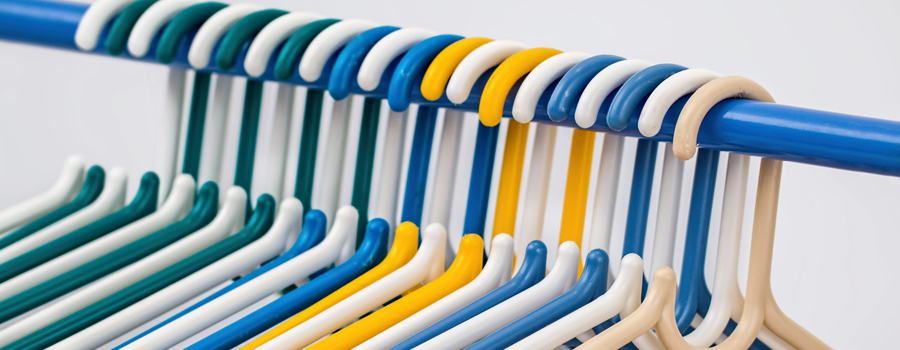
Plastics are polymer compounds (macromolecules) that are polymerized from monomers as raw materials through polyaddition or polycondensation reactions. They have medium resistance to deformation and are intermediate between fibers and rubber. They are composed of synthetic resins and fillers, plasticizers, stabilizers Agents, lubricants, pigments and other additives. The main component of plastic is resin. Resin refers to a polymer compound that has not been mixed with various additives. The basic properties of plastics are mainly determined by the nature of the resin, but additives also play an important role. Some plastics are basically composed of synthetic resins, with no or little additives, such as plexiglass.
Plastics have good properties such as chemical resistance, transparency or translucency, good insulators, light weight and sturdiness, easy processing and mass production, low price, wide range of uses, multiple functions, and easy coloring. They have become the most commonly used materials for daily necessities. Plastic products are widely used in consumer goods, packaging, transportation, agriculture, forestry and water conservancy, military defense, electrical communications, medical and health, culture, education and sports, daily necessities and other industries.
According to the different use characteristics of various plastics, plastics are usually divided into three types: general plastics, engineering plastics and special plastics.
After a long-term struggle and opening up to the world, China's plastics industry has formed a relatively complete industrial system and has become a basic material industry that keeps pace with steel, cement and wood. As a new type of material, its application fields have far exceeded the above three. materials. Since entering the 21st century, China's plastics industry has made remarkable achievements and achieved a historic leap. From the production and development speed of synthetic resin, plastic machinery and plastic products, it shows the strong development momentum of China's plastics industry.
NOA has a central laboratory of 30,000 square meters, with organic laboratory, inorganic laboratory, physical and chemical laboratory, thermal analysis laboratory, mechanics laboratory, reliability laboratory, combustion laboratory, and weather resistance laboratory. It can provide one-stop analysis and testing services for raw material quality control, component analysis, foreign matter analysis, performance testing, and reliability testing for plastic materials and products.